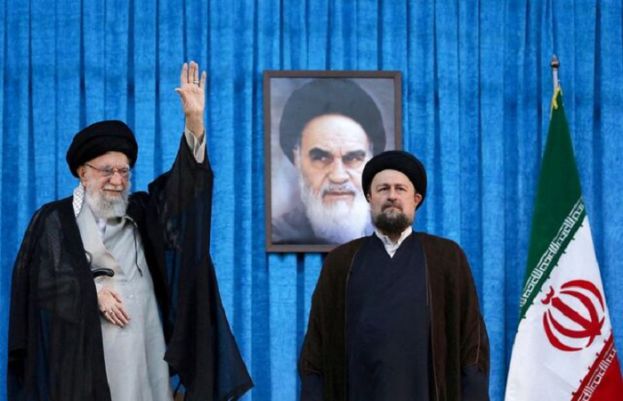
The death of Ali Khamenei has intensified debate over who will lead Iran next, with attention turning to Hassan Khomeini, grandson of the Islamic Republic’s founder. Clerics in Iran’s powerful Assembly of Experts are responsible for appointing the next Supreme Leader, and Khamenei’s killing has accelerated what had long been a sensitive and unresolved succession question. A Symbolic Heir Hassan Khomeini, 53, is the grandson of Ruhollah Khomeini, the revolutionary leader who established the Islamic Republic in 1979. He currently serves as custodian of his grandfather’s mausoleum in southern Tehran, a role that carries strong symbolic weight in Iranian politics. Although he has never held formal government office, he is considered influential within clerical circles and maintains close ties with reformist figures. Seen as a Relative Moderate Hassan Khomeini is widely viewed as more moderate compared to hardline factions that consolidated power during Khamenei’s tenure. He has publicly criticised the Guardian Council for disqualifying reformist candidates. He called for accountability following the 2022 death of Mahsa Amini, which sparked nationwide protests. He supported diplomatic engagement during the 2015 nuclear agreement negotiations. However, he has also defended the Islamic Republic’s system and criticised anti-government unrest, underscoring his loyalty to the state structure. Barred From Electoral Politics In 2016, Hassan Khomeini attempted to run for the Assembly of Experts but was disqualified by the Guardian Council, reportedly over religious credential requirements. Many observers interpreted the move as an effort to prevent a reformist challenge. Despite this setback, he remains a respected cleric with connections across political factions, including ties to the Islamic Revolutionary Guard Corps (IRGC). Succession Uncertain The selection of a new Supreme Leader will shape Iran’s domestic and foreign policy direction at a moment of heightened regional tension. Some analysts argue that appointing a more moderate figure could help stabilise internal dissent and improve international positioning. Others believe hardliners may push for continuity. The Assembly of Experts is expected to begin deliberations amid a 40-day national mourning period declared following Khamenei’s death.
Khamenei’s Death Puts Hassan Khomeini in Spotlight