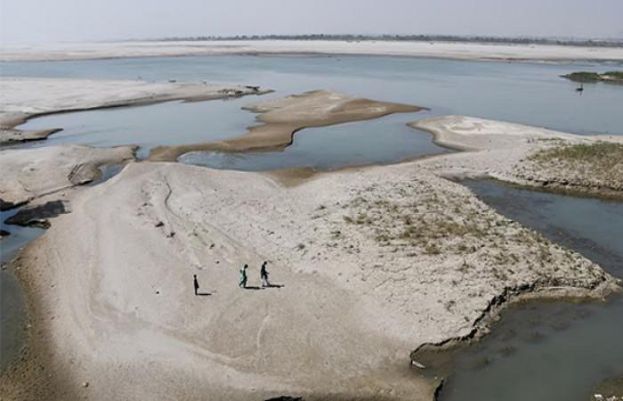
Pakistan on Wednesday reiterated its commitment to the Indus Waters Treaty (IWT) arbitration process, confirming that it will continue to fully participate in the Neutral Expert proceedings in good faith, despite India’s decision to withdraw from them. According to a statement issued by the Ministry of Foreign Affairs (MoFA), the Neutral Expert proceedings initiated at India’s own request are set to enter their next phase in Vienna from November 17 to 21, 2025. The ministry noted that the Neutral Expert had ruled that India’s non-participation would not prevent the proceedings from moving forward. Pakistan has also taken note of the Procedural Order issued by the Court of Arbitration in parallel with its recent decision, the statement added. The order confirms that the Court will continue the arbitration process in phases while considering developments before the Neutral Expert under Article IX and Annexure F of the IWT. The MoFA further noted the Permanent Court of Arbitration’s (PCA) decision of November 8, 2025, which provided key clarifications on aspects of the Court’s earlier award issued on August 8, 2025, regarding the general interpretation of the Indus Waters Treaty. According to the PCA, the clarifications confirm that Paragraph 8(a) of Annexure D prohibits all design components that could artificially raise water levels beyond the Full Pondage Level. The Court also reaffirmed that such design criteria must be adhered to at the planning stage of hydroelectric projects and cannot be replaced by operational adjustments. In a Procedural Order issued alongside the clarifications, the Court reiterated that proceedings would continue in stages, taking into account the progress before the Neutral Expert. Both parties have been invited to submit written observations on the status of the Neutral Expert process and on possible future phases of arbitration. The latest PCA decision follows the August 2025 award interpreting key provisions of the Treaty particularly Article III and Annexure D which regulate India’s hydroelectric projects on the western rivers. Earlier, on August 11, the Foreign Office said the August 8 award reaffirmed that India must “let flow” the waters of these rivers for Pakistan’s unrestricted use, emphasizing that such awards are final and binding on both parties. Recognising Pakistan’s position as the downstream riparian, the earlier award observed that the water treaty’s object and purpose are to delimit the two states’ respective rights and obligations while ensuring mutual cooperation and effective dispute resolution. Following the killing of 26 people in Indian Illegally Occupied Jammu and Kashmir (IIOK) in April this year, India unilaterally held the IWT with Pakistan in abeyance. New Delhi accused Islamabad of orchestrating the deadly militant attack, an allegation that Pakistan denies. The use of the water is governed by the IWT, which was mediated by the World Bank and signed by the neighbours in September 1960. There is no provision in the treaty for either country to unilaterally suspend or terminate the pact, which has clear dispute resolution systems. Pakistan has consistently maintained that it remains committed to the full implementation of the Indus Waters Treaty and expects India to resume the Treaty’s normal functioning and comply with the Court’s rulings.
Pakistan to Attend Neutral Expert Proceedings Despite India’s Boycott