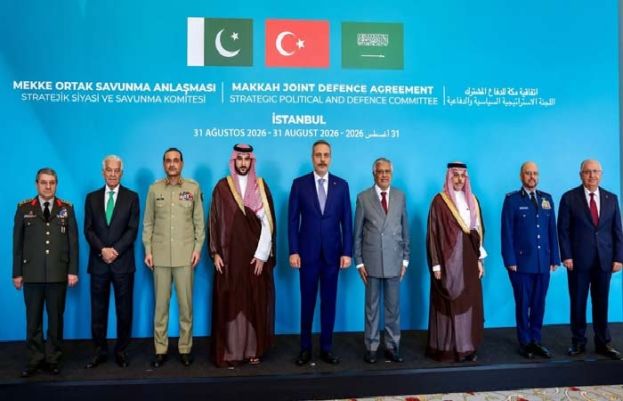
Pakistan is set to host a meeting of the tripartite Makkah Defence Alliance’s apex committee today, with discussions expected to include the conflict between Saudi Arabia and the Houthis in Yemen. A local holiday has been declared in the Islamabad Capital Territory (ICT) and Rawalpindi today. However, essential services will remain operational during the holiday, including the Metropolitan Corporation Islamabad, Capital Development Authority, ICT administration, Islamabad Police, Islamabad Electric Supply Company (IESCO), Sui Northern Gas Pipelines Limited (SNGPL) and hospitals. Pakistan, Saudi Arabia and Turkiye signed the pact in August, with the three Muslim nations pledging to come to each other’s aid in the event of an attack. Saudi Arabia has faced repeated barrages by the Houthis in Yemen, with the group targeting cities, oil facilities and shipping since fighting in Yemen’s civil war intensified in July. The attacks coincided with the expansion of the war in the Middle East, which began with US-Israeli strikes on Iran in February and has since drawn in countries across the region. Defence Minister Khawaja Asif said on Thursday that the “continuous turmoil south of Saudi Arabia will obviously be one agenda point in the meeting and it is very important”, confirming that defence and foreign ministers from the Gulf kingdom, Turkiye and Pakistan would attend. “Any threat to Saudi Arabia is a threat to Pakistan and Turkiye according to the pact, which is absolutely clear,” Asif said on Wednesday, praising Riyadh’s handling of the conflict with the Houthis, who hold swathes of territory in Yemen, including its capital Sanaa. He said the pact, which was formed during the expansion of the war in the Middle East following US-Israeli strikes on Iran in February, was still at a “nascent stage”. “Initially we need to have frequent meetings to steer what is being formulated, in a way that in the next couple of months we have everything in place so that we can move forward,” he added. He declined to comment on how the pact would react to a direct attack by Iran on Saudi Arabia, and identified Israel as a possible threat to other countries in the region. “The possibility of some conflict, or aggression from the Israeli side exists, so we need to close our ranks, the countries of this region,” he said. Pakistan brokered a June accord that led to a brief halt in fighting between the United States and Iran and set a roadmap for further agreement on reopening the crucial Strait of Hormuz and for negotiations on Tehran’s nuclear programme. But the truce collapsed, with Washington and Tehran accusing each other of violating the agreement, prompting months of shuttle diplomacy to resuscitate the ceasefire, led principally by mediators Qatar and Pakistan. Asif said Pakistan had played “a very, very constructive role” between Washington and Tehran but the outcome of ongoing mediation was “still fragile” and peace was “not yet embedded in a way people were expecting”.
Makkah defence pact nations meet today in Islamabad with Yemen conflict high on agenda