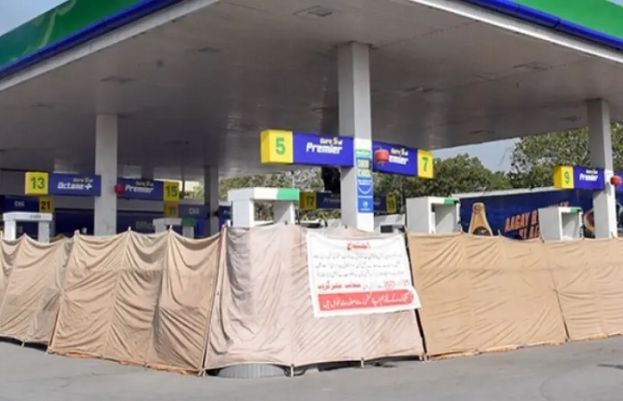
The Petroleum Dealers Association announced on Wednesday that petrol pumps across the country would remain closed for 24 hours starting Thursday morning at 6am until Friday 6am, in protest against the government’s policy of revising petroleum product prices on a daily basis. Addressing a press conference, association representative Malik Khuda Bakhsh said the daily price fluctuation mechanism was unacceptable and that consultations had been held with a committee following an OGRA meeting earlier in the day. “We are going on strike tomorrow for 24 hours,” he said. The Oil and Gas Regulatory Authority (Ogra) updates petroleum products prices on a daily basis on its website to ensure transparency and allow the immediate impact of international price fluctuations to be passed on to consumers. The daily pricing is based on a seven-day weekly average of international market prices to align with international standards, according to Petroleum Minister Ali Pervaiz Malik. A day earlier, All Pakistan Petrol Pumps Owners Association (APPPOA) announced a nationwide shutdown of petrol pumps after negotiations with the government ended without a breakthrough. “We cannot accept daily changes in petroleum product prices under any circumstances,” Butt said. APPPOA announced its support for the dealers’ strike, with president Nadeem Hussain saying that public transport would also shut down alongside petrol pumps from tonight. He demanded the government withdraw its daily petroleum pricing policy. The President of the Pakistan Mini Mazda Goods Transport Association, Haji Sher Ali Chaudhry, also announced full support for the strike, saying Mazda vehicles would stop operating from midnight tonight. “We reject the decision to increase petroleum product prices on a daily basis — it is causing immense losses to transporters,” he said, urging the government to reverse its decision. The Pakistan Business Forum, however, called on the Petroleum Dealers Association to reconsider its strike decision, saying the action was against the interests of the public and the economy, particularly in extraordinary circumstances. Chief Organiser Ahmad Jawad said the demand for increased dealer margins was not appropriate at this time, noting that dealers were already receiving approximately Rs8 per litre in margin, which he described as sufficient. Jawad said the government should withdraw the daily pricing policy, questioning how businesses and the economy could function under a system of daily price revisions. He also called on the government to defer the petroleum levy for one month to provide relief to the public, adding that placing all burdens on the public was not appropriate. He said the dealers association could not take unilateral decisions in such circumstances. Decision challenged Separately, the daily petroleum pricing policy has been challenged in the Lahore High Court. A private organisation, in its petition, argued that daily price increases were causing continuous inflation and that the public was not benefiting when international petroleum prices fell. The petition contended that arbitrary determination of petroleum prices was contrary to the Constitution and law, and requested the court to declare the daily pricing mechanism illegal.
Petrol pumps to shut nationwide for 24 hours as dealers strike over daily pricing