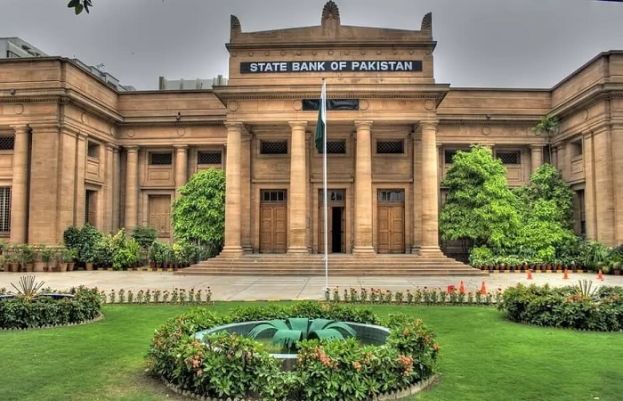
The State Bank of Pakistan’s (SBP) Monetary Policy Committee (MPC) on Monday maintained its key interest rate at 10.5%, pausing its easing cycle as rising global energy prices and regional tensions pose new inflation risks for the import-dependent economy. “The Monetary Policy Committee has decided to keep the policy rate unchanged at 10.5%,” the State Bank of Pakistan (SBP) said on its website, adding that a detailed statement would be released soon. The SBP has cut the key rate by a cumulative 1,150 basis points since mid-2024, from a record 22% in 2023, as inflation cooled sharply from multi-decade highs. In its policy statement, the SBP said that the MPC decided to keep the policy rate unchanged as it observed that the macroeconomic outlook has “become quite uncertain following [the] outbreak of the war in the Middle East”. During the meeting, the MPC noted that “the conflict in the Middle East has led to a sharp increase in global fuel prices as well as freight and insurance costs, while also affecting cross-border trade and travel.” “The MPC observed that the intensity and duration of the conflict will both be important determinants of the impact on the domestic economy.” However, the committee noted that macroeconomic fundamentals, especially in terms of inflation, foreign exchange reserves, and fiscal buffers, were better compared to the time of the start of the Russia-Ukraine war in early 2022. The MPC’s initial assessment of the evolving geopolitical situation indicated that the outlook for key macroeconomic variables for fiscal year 2026 was within the earlier projected ranges. However, risks for the macroeconomic outlook have increased significantly. Meanwhile, on the domestic front, inflation rose to 5.8% in January and further to 7% in February 2026. The current account recorded a surplus in January, which, amidst weak official inflows, led to continued interbank FX purchases by the SBP and the buildup in FX reserves to $16.3 billion as of February 27. Large-scale manufacturing (LSM) grew by 0.4% year-on-year in December 2025, with cumulative growth reaching 4.8% in July-December FY26. Additionally, consumers’ inflation expectations and confidence improved, while those of businesses remained broadly stable in February. The Federal Board of Revenue (FBR) tax collection remained below target in both January and February, further widening the cumulative shortfall during July-February FY26. “The Committee noted the high degree of uncertainty in the outlook for international commodity prices and supply-chain disruptions in the backdrop of the war in the Middle East. In this context, the MPC deemed today’s decision as appropriate, and reaffirmed its commitment to ensure the hard-earned price stability,” read the statement. However, the MPC stressed the need for expediting structural reforms to ensure sustainable economic growth. The committee noted that the headline inflation rose to 7% year-on-year in February, attributed to the phasing out of the low base effect from food and energy prices, along with the rationalisation of fixed charges on households’ electricity bills. The MPC assessed that the impact of higher expected domestic energy prices is likely to be partially offset by recent favourable movement in food prices amidst improved supply of key items and better prospects of agriculture produce. It is expected that inflation may remain above 7% in the remaining months of FY26 and into FY27.
SBP maintains interest rate at 10.5% on inflation fears amid surging oil prices