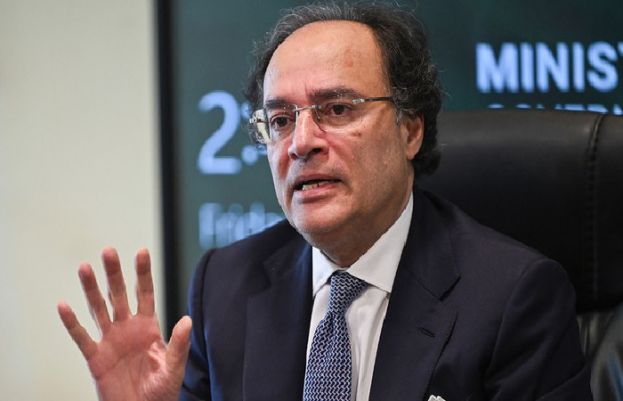
Finance Minister Muhammad Aurangzeb underscored Pakistan’s strategic shift from seeking aid-based support towards trade- and investment-led engagement to ensure long-term economic sustainability and mutually beneficial partnerships, particularly with the Gulf Cooperation Council (GCC) countries. In an interview with CNN Business Arabia, Aurangzeb highlighted the vision of Prime Minister Shehbaz Sharif, which reflected Pakistan’s renewed economic confidence and reform momentum. He said that Pakistan has followed a comprehensive macroeconomic stabilisation program for the past 18 months, which has delivered tangible and measurable results, while inflation has declined to single-digit levels from an unprecedented 38%. On the fiscal front, Pakistan has achieved primary surpluses, while the current account deficit remains well within targeted limits. According to the finance czar, the exchange rate has also stabilised, and foreign exchange reserves have improved to approximately 2.5 months of import cover, reflecting strengthening external buffers. He maintained that the country has two major external validations, which indicate Pakistan’s improving economic outlook. Firstly, he said, all three international credit rating agencies have aligned their assessments this year by upgrading Pakistan’s ratings and outlook. On the other hand, the country has completed the second review under the IMF Extended Fund Facility, with the IMF Executive Board granting its approval earlier this week. He stated that such developments demonstrate growing international confidence in Pakistan’s economic management and reform trajectory. The finance minister further emphasised that macroeconomic stabilisation has been achieved through a coordinated approach combining disciplined monetary and fiscal policies with an ambitious structural reform agenda. “Reforms are being implemented across key areas, including taxation, energy, state-owned enterprises, public financial management, and privatisation, aimed at consolidating stability and laying the foundation for sustainable growth,” Aurangzeb said. The finance minister also highlighted the significant progress in Pakistan’s improvement of the tax-to-GDP ratio. “During the last fiscal year, it increased to 10.3 per cent, with a clear path towards 11 per cent,” the finance minister said. He further explained the government’s objective to reach a level of tax collection that ensures fiscal sustainability over the medium to long term. “This is being pursued through widening the tax base by bringing previously undertaxed but economically significant sectors such as real estate, agriculture, and wholesale and retail trade into the formal net, alongside deepening compliance by reducing leakages through production monitoring systems and AI-enabled technologies. Simultaneously, the tax administration is being transformed through reforms in people, processes, and technology,” he said. The minister further highlighted efforts to improve governance in [power] distribution companies, involve private sector expertise, advance privatisation, and reduce circular debt, which has long constrained the power sector. “Rationalising the tariff regime is essential to making energy more competitive for industry, thereby enabling industrial revival and economic growth,” he stressed. Senator Aurangzeb acknowledged the longstanding support of GCC countries, including Saudi Arabia, the United Arab Emirates, and Qatar, for their critical role in critical role supporting Pakistan through financing, funding, and cooperation at international financial institutions such as the International Monetary Fund. “This relationship is now evolving towards a new phase centred on trade expansion and investment flows. Remittances continue to play a vital role in supporting the current account, with inflows reaching approximately $38 billion last year and projected to rise to $41-42 billion this year, over half of which originates from GCC countries,” he added. He further said, “Pakistan is actively engaging with GCC partners to attract investment in priority sectors including energy, oil and gas, minerals and mining, artificial intelligence, digital infrastructure, pharmaceuticals, and agriculture.” Expressing optimism regarding progress on a Free Trade Agreement (FTA) with the GCC, he termed the discussions at an “advanced stage”. Senator Aurangzeb reiterated the government’s strategic direction in shifting the collective focus on trade rather than relying on aid. “Pakistan’s future lies in fostering trade and investment partnerships rather than reliance on aid,” said the finance minister. He also emphasised the role of foreign direct investment in supporting the higher GDP growth, generating employment opportunities, and delivering shared economic benefits for Pakistan and its partners. “The government is fully mobilised to translate this vision into reality.” He concluded.
Aurangzeb highlights Pakistan’s strategic shift to restore economic confidence