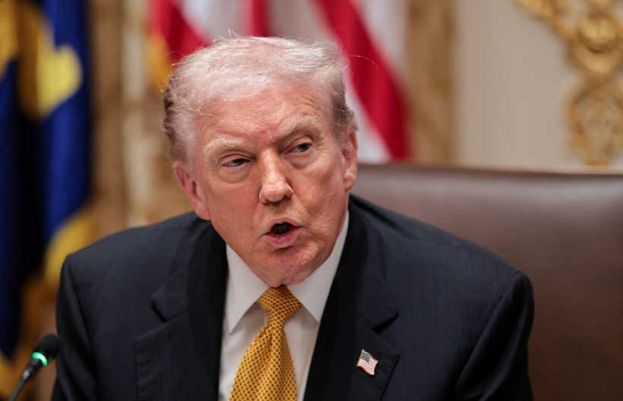
US President Donald Trump on Friday announced that his administration will withhold federal broadband funding from states whose AI regulations are seen as hindering American technological leadership. “We want to have one central source of approval,” Trump told reporters, accompanied by senior advisers including Treasury Secretary Scott Bessent. He argued that 50 different regulatory frameworks across the states impede the growth of the emerging AI industry. “To succeed, US AI companies must be free to innovate without burdensome regulation,” the executive order stated, noting that the current patchwork of state rules makes compliance particularly difficult for start-ups. Trump has positioned AI as a key technology for national competitiveness, collaborating with US firms to boost investment in a sector where China has also made significant advances. However, critics warn that unfettered AI development could pose risks to Americans. The order also signals a broader effort by the Trump administration to challenge anti-discrimination measures in AI. It specifically targets states like Colorado, which have tried to prevent discriminatory language from being embedded in AI models, warning that such regulations could introduce “ideological bias” and produce inaccurate results. Federal funding threatened The order will give the Trump administration tools to push back on the most “onerous” state regulations, said White House AI adviser David Sacks. The administration will not oppose rules governing AI that relate to child safety, he added. It directs the Secretary of Commerce to evaluate state laws for conflicts with Trump’s AI priorities and to block those states in conflict from accessing the $42 billion Broadband Equity Access and Deployment fund. Democratic Representative Don Beyer, who co-chairs a bipartisan caucus on AI, said the order would squelch safety reforms passed by states and create “a lawless Wild West environment for AI companies that puts Americans at risk.” He warned that the order would reduce the likelihood of congressional action and likely violate the 10th Amendment, which says that any powers not specifically given to the federal government belong to the states or the people. Trump’s order called for his administration to work with Congress to craft a national standard that forbids state laws which conflict with federal policy, protects children, prevents censorship, respects copyrights and protects communities. Until such a standard was in place, the order called for actions to “check the most onerous and excessive laws emerging from the states that threaten to stymie innovation”. Numerous state laws in place Major AI players, including ChatGPT maker OpenAI, Alphabet’s Google, Meta Platforms, and venture capital firm Andreessen Horowitz, have said the federal government, not states, should regulate the industry. Yet state leaders from both major political parties have said they need the power to put guardrails around AI, particularly as Congress has consistently failed to pass laws governing the tech industry. New York state last month became the first to enact a law requiring online retailers that employ “surveillance pricing” to disclose their use of algorithms and customers’ personal data. California and lawmakers in Washington are considering bans on such methods, which are also known as “personalised pricing.” Florida Governor Ron DeSantis, a Republican, has proposed an AI bill of rights that includes data privacy, parental controls and consumer protections. California Governor Gavin Newsom, whose state is home to several major AI companies, signed off on a bill this year requiring major AI developers to explain plans to mitigate potential catastrophic risks. Other states have passed laws banning AI-generated non-consensual sexual imagery and unauthorised political deepfakes.
Trump warns for funding states over AI regulations